

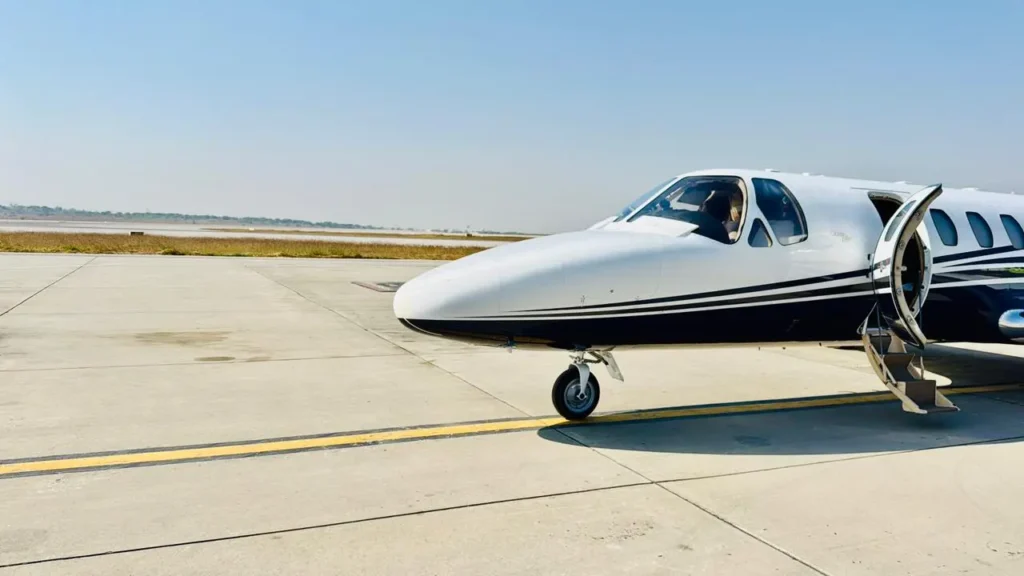
How We Temporarily Imported a Cessna Citation 560 into Pakistan - A Landmark Mission for 2025
In early 2025, we received a unique and challenging inquiry:
“Is it possible to temporarily import an aircraft into Pakistan—specifically for a short-term survey mission?”
The request involved a Cessna Citation 560, a classic model manufactured in the early 1990s. And right from the beginning, the questions started piling up:
- How exactly would the temporary import process work
- Which departments would oversee it
- What types of NOCs and approvals were required?
- Would Pakistan even allow a temporary import without converting the aircraft to local ownership?
Up until then, every aircraft import we handled eventually transitioned into permanent ownership or registration changes. This case was different. The aircraft needed to enter Pakistan on its own registration, stay for 30 days only, complete its survey tasks, and then exit — all without ownership change. This alone made the operation rare and complex.
Geopolitical Delays & Logistical Challenges
At that time, due to ongoing India–Pakistan tensions, the airspace and routing constraints made it extremely difficult to position the aircraft on schedule. The Citation 560 was initially located in Indonesia, but safe and timely routing into Pakistan wasn’t feasible.
So we made the tough call:
Pause the mission.
Wait for the right operational window.
This decision turned out to be crucial.
August 2025: The Green Light
By August 2025, the operator finally secured the essential permissions from their side. With the go-ahead received, we restarted the entire process from scratch.
And this is where the real aviation puzzle began.
Temporary import into Pakistan is not a routine procedure — it requires clear justification, regulatory clarity, and precise documentation. Our operations and commercial teams literally had to dig through regulatory books and historical cases to build a solid technical explanation and framework for the Pakistan Civil Aviation Authority (CAA).
The Paperwork Marathon: 6–10 Departments Involved
To get this mission approved, we had to coordinate with:
- CAA Pakistan
- Customs authorities
- Airport management
- Security departments
- Engineering & inspection teams
- Fueling & apron services
- Local ground handling units
- And several additional regulatory bodies
Each of these departments required specific documentation, inspections, NOCs, and clearances. The process was intense, multi-layered, and time-sensitive.
But our team handled it with complete precision — submitting permissions on time, coordinating inspections, and ensuring compliance with every requirement.
Route & Logistics: From Ankara to OPIS
Once approvals were secured, we planned and executed an end-to-end operational chain from Ankara → UBBB → UTDD → OPIS, ensuring seamless support throughout the journey.
Upon arrival in Pakistan, the client required several mandatory arrangements, all of which were pre-organized by our team:
- Dedicated Hangar Space (a compulsory requirement)
- Office arrangements
- Ground handling support
- Transportation for crew & engineers
- Airside passes
- Catering
- Flight planning & dispatch
- Fuel coordination
- Full supervision
- On-ground operational support
- All necessary approvals and reporting
Every element had to be ready before the aircraft reached Pakistani airspace.
A First for Pakistan — And a Privilege for Us
This operation was not just another job.
It was the first known temporary import of an aircraft into Pakistan under such conditions.
For us at Airways Flight Support, it was a matter of pride and responsibility. Being trusted with such a rare and technically demanding mission reaffirmed our capability to handle complex international aviation operations with confidence and precision.